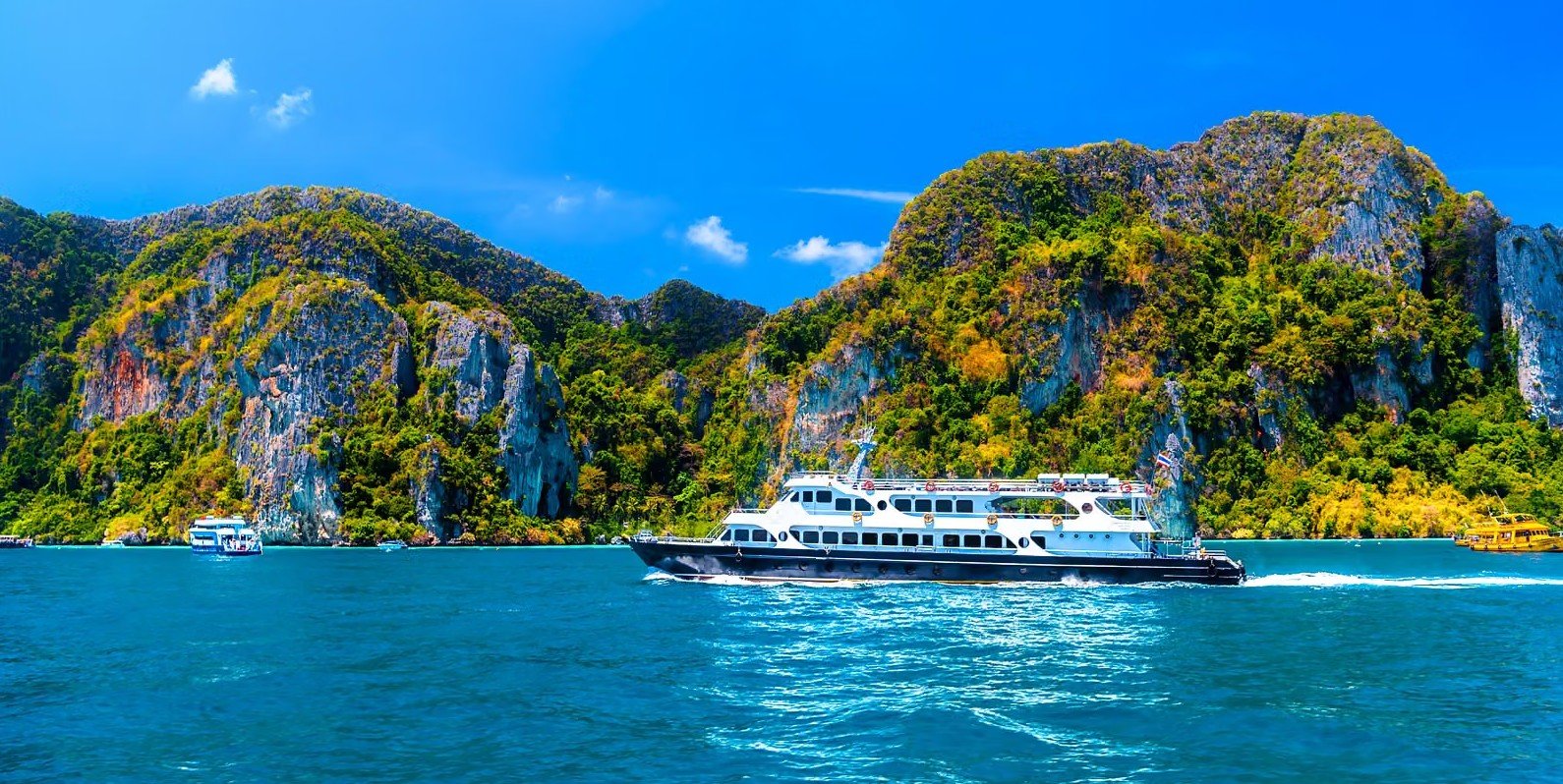
Travelling by ferry is one of the easiest ways to get from Phuket to nearby islands and destinations along Thailand’s Andaman coast. Regular passenger boats connect Phuket with the Phi Phi Islands, while other services link the island with Krabi, Koh Lanta and the Koh Yao islands.
The important thing is knowing which pier to use. Most larger ferries and many speedboat transfers to destinations such as Phi Phi and Krabi depart from Rassada Pier, east of Phuket Town. However, public boats to Koh Yao Noi and Koh Yao Yai generally use Bang Rong Pier on Phuket’s northeast coast.
This Phuket ferry guide explains the main routes, departure piers, ticket options and approximate journey times. It also compares standard ferries with speedboats and covers what to expect on departure day, so you can plan your journey independently.
Ferry Travel from Phuket: What You Need to Know
Phuket has several passenger boat services connecting the island with destinations in the Andaman Sea. The most popular routes are to Phi Phi, Krabi and Koh Lanta, although shorter crossings to Koh Yao Noi and Koh Yao Yai are also available.
There are two main types of passenger transport to understand:
- Regular ferries: Larger passenger vessels with indoor seating, more space for luggage and generally a slower, steadier crossing. They are particularly popular for the Phuket to Phi Phi route.
- Speedboats: Smaller, faster boats that reduce travel time but can feel considerably bumpier in rough conditions. They are commonly used for shorter island transfers and routes to destinations such as Koh Yao Noi.
Some journeys also involve changing boats at an intermediate destination. For example, a traditional ferry journey from Phuket to Krabi can involve changing at Tonsai Pier on Phi Phi Don rather than travelling directly between the two provinces.
It is also important to distinguish scheduled passenger transfers from organised island-hopping tours. A transfer takes you between departure and arrival piers, while a tour normally includes sightseeing stops, swimming or snorkelling and a return journey to Phuket.
For independent travellers, booking a one-way or return passenger transfer is usually the simplest option.
Phuket's Main Ferry Piers
Choosing the correct departure pier is one of the most important parts of planning a ferry journey from Phuket. The island has several piers, but they do not all operate the same passenger routes.
Rassada Pier
Rassada Pier is Phuket’s main passenger ferry terminal and the most important departure point for travellers heading towards Phi Phi, Krabi and Koh Lanta.
The pier is located on Phuket’s east coast, close to Phuket Town. It is used by several ferry and speedboat operators, with services connecting Phuket to destinations including:
- Koh Phi Phi, including Tonsai Pier and Laem Tong Beach.
- Krabi, including connections towards Krabi Town, Ao Nang and Railay.
- Koh Lanta, generally via Phi Phi or by a direct speedboat service.
- Koh Lipe, with longer seasonal speedboat connections.
Journey times and departure frequencies depend on the destination, operator and season. The Phuket to Phi Phi route has several daily departures during the main operating periods, while longer routes may have fewer services.
Rassada Pier has a passenger terminal with ticketing facilities, waiting areas and basic amenities. There are also local transport options for reaching the pier from Phuket Town and the main beach areas.
If you are staying in Patong, Kata, Karon or other parts of the west coast, allow enough time for the road journey across the island. Some ferry tickets include shared hotel transfers, but this is not guaranteed. Check the booking conditions before paying.
For more detailed information about the terminal, its location and facilities, see our Rassada Pier guide.

Bang Rong Pier
Bang Rong Pier is located in Pa Klok on Phuket’s northeast coast. Unlike Rassada, which handles many of the longer passenger routes, Bang Rong is particularly important for travellers visiting Koh Yao Noi and Koh Yao Yai independently.
Public speedboats connect Bang Rong with Manoh Pier on Koh Yao Noi. The crossing normally takes around 30–40 minutes, depending on the boat and conditions. Some slower longtail services are also available.
Services to Koh Yao Yai operate to different arrival piers, including Klong Hia and Chong Lard. Always check the exact arrival point before booking, particularly if your accommodation is arranging a pickup.
Bang Rong is also relatively convenient for Phuket International Airport compared with Rassada Pier, although you should still arrange road transport in advance if travelling with luggage.
Other Departure Points
Several other piers around Phuket are used for private boat charters, resort transfers and organised excursions. They should not automatically be considered alternatives to the main public ferry terminals.
- Chalong Pier: Located in southern Phuket, Chalong is an important departure point for diving trips, private boats and excursions to nearby islands. It is not the main terminal for regular public ferries to Phi Phi or Krabi.
- Ao Por Pier: Located on the northeast coast, Ao Por is used for some resort transfers, private boat services and excursions around Phang Nga Bay.
- Laem Hin Pier: Located on Phuket’s east coast, Laem Hin serves local boat connections and some island-related services. Check the operator and destination rather than assuming it is a public ferry terminal.
- Phuket Boat Lagoon and Royal Phuket Marina: These marinas are used for private charters, yacht trips and selected excursion services.
If you are booking a regular passenger ferry, follow the departure pier printed on your confirmation rather than choosing a pier based on its proximity to your hotel.

Popular Ferry Routes from Phuket
The best route depends on your destination and how quickly you want to travel. Some islands have direct ferry connections, while others require a speedboat or a change of boat along the way.
Phuket to Phi Phi Islands
The Phuket to Phi Phi route is one of the most popular passenger boat journeys in the region. Regular ferries and speedboats operate between Rassada Pier and Phi Phi Don, making it relatively straightforward to visit the islands independently.
Most passenger services arrive at Tonsai Pier, the main arrival point on Phi Phi Don. Some speedboat services also travel to Laem Tong Beach in the northern part of the island.
Typical journey times are:
- Regular ferry: Approximately 2 hours.
- Speedboat: Approximately 1 hour, depending on the operator and arrival point.
Andaman Wave Master is one of the established operators on this route, offering both conventional ferry and speedboat transfers. Other operators also sell scheduled connections between Phuket and Phi Phi.
If you are staying on Phi Phi Don, check whether your accommodation is close to Tonsai Pier or whether you need a further longtail boat transfer. Travellers staying around Laem Tong should look specifically for services arriving at that beach.
For an independent visit, a one-way or return ticket is generally sufficient. You do not need to purchase an island-hopping tour unless you also want organised sightseeing and activities.
Our complete guide to the Phi Phi Islands covers the main beaches, accommodation areas and things to do once you arrive.

Phuket to Krabi
Travelling from Phuket to Krabi by boat is possible, but it is important to check the exact arrival destination before booking. Krabi is a large province with several separate piers, and a ticket simply labelled “Krabi” does not necessarily take you close to your hotel.
There are two main ways to travel by sea:
1. Ferry via Phi Phi
One conventional ferry option involves travelling from Rassada Pier to Tonsai Pier on Phi Phi Don and changing to another ferry towards Krabi’s Klong Jilad Pier.
The first crossing from Phuket to Phi Phi takes approximately two hours, followed by another crossing of around two hours towards Krabi. The total journey therefore takes several hours and depends on the connection between boats.
Andaman Wave Master publishes this connecting route, but travellers should check the transfer arrangements carefully. Do not assume that two boats scheduled close together will automatically wait for one another.
2. Direct speedboat transfers
Direct speedboat services are also advertised between Phuket and parts of the Krabi coastline. Depending on the operator and departure date, destinations can include Ao Nang and Railay.
Published operator journey estimates vary by destination. Check the booking system for the exact service, rather than relying on a generic Phuket-to-Krabi travel time.
Before booking, understand the difference between these arrival points:
- Klong Jilad Pier: The passenger pier serving Krabi Town.
- Nopparat Thara Pier: Used for boat services serving Ao Nang.
- Railay East: The main boat arrival area for Railay, which is not connected to the mainland by road.
- Ao Nam Mao: Another departure and arrival point for certain Railay boat connections.
If you are staying in Ao Nang, a boat arriving at Klong Jilad may require an additional road transfer. Compare the complete journey, not just the time spent on the water.
For some travellers, a minivan or private car around Phang Nga Bay can be a more practical alternative, particularly when travelling to Krabi Town or Krabi International Airport.
Phuket to Koh Lanta
Koh Lanta is another popular destination for travellers continuing south from Phuket.
Passenger boat services from Rassada Pier connect Phuket with Koh Lanta, with some routes travelling via Phi Phi. Direct speedboat services are also advertised on selected dates.
Traditional ferry connections can take approximately four hours, while speedboat services can be considerably faster. Actual journey times depend on the route, intermediate stops and operating conditions.
The main arrival point on Koh Lanta is Saladan Pier in the north of the island. From there, you can arrange a taxi or local transfer to your accommodation.
Check the arrival pier and whether the ticket includes onward transport. This is particularly important if you are staying in the southern parts of Koh Lanta.
Phuket to Koh Yao Noi and Koh Yao Yai
The Koh Yao islands are among the easiest destinations to reach from Phuket if you want a shorter independent island trip.
For Koh Yao Noi, the main public route departs from Bang Rong Pier and arrives at Manoh Pier. Speedboats generally take around 30–40 minutes, while slower longtail boats can take approximately one hour.
Koh Yao Yai services also operate from Phuket, with the arrival pier depending on the operator. Klong Hia and Chong Lard are among the piers used on the island.
Unlike the longer journeys to Phi Phi and Koh Lanta, these crossings are relatively short and are useful for travellers planning a day visit or a longer stay.
One important detail is that the islands have different arrival points. Check the pier against your accommodation location and arrange onward transport before departure if necessary.
Phuket to Koh Lipe
Koh Lipe is a more distant island destination in the southern Andaman Sea. Speedboat services connect Phuket with Koh Lipe, generally using Rassada Pier as the departure point and Pattaya Beach as the arrival area.
The journey can take approximately five to five and a half hours, depending on the service and any intermediate stops.
This is a considerably longer and more demanding crossing than the trip to Phi Phi. Services are particularly dependent on the operating season and sea conditions, so check availability for your exact travel date.
If you are planning to visit Koh Lipe, compare the full route and consider whether travelling via Koh Lanta or another intermediate destination makes more sense for your itinerary.
Other Island Trips and Boat Connections
Phuket also has numerous boat connections to smaller islands and destinations around Phang Nga Bay. However, many of these are sold as organised excursions rather than scheduled passenger ferry transfers.
For example, James Bond Island is normally visited as part of a guided boat excursion around Phang Nga Bay. It is not a conventional point-to-point ferry destination with the same type of regular passenger service as Phi Phi.
Similarly, trips to Coral Island, Racha Island and other nearby destinations are generally organised as day tours or private boat trips.
If your main goal is to visit several islands in one day, compare organised trips rather than booking separate passenger transfers. Our guide to the best island-hopping tours in Phuket explains the different options.
Phuket Ferry Routes at a Glance
The following table provides a quick overview of the main passenger connections from Phuket. Journey times are approximate and should be checked against the specific service you intend to book.
| Destination | Departure pier | Transport | Approximate journey |
|---|---|---|---|
| Phi Phi Islands | Rassada | Ferry or speedboat | 1–2 hours |
| Krabi Town | Rassada | Ferry via Phi Phi or speedboat connection | Several hours by connecting ferry |
| Ao Nang | Rassada | Speedboat or connecting ferry | Approximately 1–2 hours by direct speedboat |
| Railay | Rassada | Speedboat or connecting ferry | Approximately 1–2 hours by direct speedboat |
| Koh Lanta | Rassada | Ferry or speedboat | Approximately 1.5–4 hours |
| Koh Yao Noi | Bang Rong | Speedboat or longtail | Approximately 30–60 minutes |
| Koh Yao Yai | Bang Rong | Speedboat | Approximately 30–40 minutes |
| Koh Lipe | Rassada | Speedboat | Approximately 5–5.5 hours |
Important: This is a route overview, not a guaranteed daily timetable. Some services are seasonal, some require a connection and others may operate only on selected dates. Always check the exact departure and arrival piers when booking.
How to Book Ferry Tickets in Phuket
Booking Phuket ferry tickets is relatively straightforward. You can reserve directly with a boat operator, use an established online booking platform or purchase tickets through a local travel agency.
Book Directly with the Ferry Operator
Booking directly is a good option when you already know which operator serves your chosen route.
For example, Andaman Wave Master offers online reservations for ferry and speedboat transfers between Phuket, Phi Phi and other destinations. Bundhaya Speedboat also provides online booking for routes across the Andaman Sea.
Direct booking allows you to check the operator’s own departure information, available ticket classes and conditions before paying.
Use an Online Ferry Booking Platform
Booking platforms can be useful when comparing several operators on the same route. They often display different departure times, journey durations and transport types in one place.
Established platforms to consider include:
- 12Go – A transport booking platform covering ferries, buses, trains and other transfers in Thailand.
- Bookaway – Offers transport bookings and route comparisons in popular travel destinations.
- Smart En Plus – Lists ferry, speedboat and combined transport services in Thailand.
Availability and the operators listed vary between platforms. Compare the actual service and arrival pier rather than selecting the cheapest result automatically.
Buy Tickets at the Pier or Through a Local Agency
It is also possible to purchase ferry tickets through ticket counters and local travel agencies in Phuket.
This can be convenient if you prefer to arrange your transport in person or need assistance organising a hotel pickup. However, availability is not guaranteed, particularly for popular departures during busy travel periods.
For a specific departure, booking ahead is generally the safer option.
What to Check Before Paying
Before confirming your Phuket ferry tickets, check the following details:
- Departure pier: Confirm the exact terminal and location in Phuket.
- Arrival pier: Make sure it is close to your destination or accommodation.
- Transport type: Check whether the ticket is for a regular ferry, speedboat or a connecting service.
- Departure time: Verify the local departure time and date.
- Journey duration: Check whether the estimated time includes intermediate stops.
- Luggage allowance: Review any size, weight or excess baggage charges.
- Hotel transfer: Confirm whether transport to the pier is included or needs to be arranged separately.
- Cancellation conditions: Read the refund and rescheduling policy, particularly during the rainy season.
After booking, save your confirmation email and any electronic ticket. Some operators issue QR-code tickets, while others may require you to exchange your booking confirmation for a boarding ticket at the counter.
What to Expect on Ferry Day
Once you have booked your ticket, the actual departure process is usually straightforward. However, arriving at the correct pier and allowing enough time for check-in can make the experience much easier.
How Early Should You Arrive?
For most departures from Rassada Pier, arriving around 30–45 minutes before departure is a sensible starting point. The terminal’s published guidance also recommends arriving at least 30 minutes before departure.
However, allow additional time if you need to collect physical tickets, check luggage, arrange a hotel transfer or travel during a busy period. Your operator’s confirmation should take priority if it specifies an earlier check-in time.
Check-In and Boarding
Once you reach the pier, look for your operator’s ticket counter or check-in area.
- Present your booking confirmation or electronic ticket.
- Show identification or passport details if requested.
- Collect or confirm your boarding ticket if necessary.
- Follow the staff’s instructions regarding luggage and boarding.
- Wait in the designated passenger area until boarding begins.
Some operators use different boarding procedures, so follow the instructions in your confirmation rather than assuming every ferry operates in exactly the same way.
Luggage Allowances
Luggage policies vary between ferry and speedboat operators. Larger ferries generally have more room for suitcases, while smaller speedboats have limited storage space.
Some operators allow one small and one larger suitcase per passenger, but this should not be treated as a universal allowance. Check your individual ticket conditions before travelling, especially if you have oversized luggage, sports equipment or several bags.
If you are travelling with a large backpack or suitcase, a conventional ferry may be a more comfortable choice than a small speedboat.
Seasickness and Comfort
The Andaman Sea can become choppy, particularly during periods of stronger winds and rough weather. Even a relatively short speedboat crossing can feel uncomfortable in these conditions.
If you are prone to seasickness:
- Consider a larger ferry rather than a small speedboat.
- Eat a light meal before departure rather than travelling on a completely empty stomach.
- Bring suitable seasickness medication if you normally use it.
- Stay hydrated and avoid excessive alcohol before travelling.
- Choose a seat where you feel most comfortable and follow the crew’s instructions.
It is worth remembering that a faster journey is not necessarily a more comfortable one.
Weather Disruptions and Cancellations
Boat schedules in Phuket can change because of weather and sea conditions. Operators may delay or cancel departures when conditions are considered unsafe.
This is particularly relevant during the southwest monsoon period, which generally affects Phuket and the Andaman coast from around May to October. Conditions vary from year to year, and rough seas can occur outside these months too.
If your departure is cancelled, contact the operator or booking platform to confirm the available alternatives. Do not arrange a separate replacement journey until you understand the refund or rescheduling conditions of your original ticket.
Avoid booking a ferry that arrives shortly before an international flight or another important connection. Leaving a generous time buffer is much safer than relying on everything running exactly to schedule.
What Should You Bring?
A few simple items can make a ferry journey more comfortable:
- Your passport or other identification if required by the operator.
- Your booking confirmation or electronic ticket.
- Drinking water.
- Sunscreen and sunglasses.
- A light jacket or something to cover up in air-conditioned ferry cabins.
- Seasickness medication if needed.
- A waterproof bag for electronics and valuables, particularly on speedboats.
- Some cash for local transfers or small purchases at the destination.
Ferry vs Speedboat: Which Should You Choose?
Choosing between a regular ferry and a speedboat depends on your destination, budget, luggage and comfort preferences.
Neither option is automatically better. A speedboat can save considerable time on some routes, but a conventional ferry is often more comfortable for longer journeys.
| Factor | Regular ferry | Speedboat |
|---|---|---|
| Journey time | Usually slower | Usually faster |
| Comfort | Generally more stable, with indoor seating | Can be bumpy in rough conditions |
| Price | Often a more economical option | Can cost more, depending on the route |
| Luggage | Generally more storage space | More limited storage |
| Sea conditions | Usually a steadier ride | More affected by waves and wind |
| Best for | Longer journeys and travellers with luggage | Shorter crossings and travellers prioritising speed |
When Should You Choose a Ferry?
A conventional ferry is often the better option if you:
- Prefer a more stable journey.
- Are travelling with larger suitcases or several bags.
- Want more space to move around.
- Are travelling with children or people who are sensitive to rough sea conditions.
- Do not mind spending a little longer on the water.
When Should You Choose a Speedboat?
A speedboat may be more suitable if you:
- Want to reach your destination as quickly as possible.
- Are travelling on a relatively short route.
- Have limited luggage.
- Prefer smaller boats and do not mind a potentially bumpier ride.
- Have checked that the operator is running the service under suitable sea conditions.
Always consider the weather forecast and the operator’s safety instructions. If sea conditions are rough, a faster boat is not necessarily the best choice.
Practical Tips for Ferry Travel in Phuket
A little preparation can help you avoid common problems when travelling between Phuket and the surrounding islands.
Choose Your Pier Based on Your Destination
Do not assume that every boat leaves from Rassada Pier. It is the main terminal for Phi Phi and many longer passenger routes, but Bang Rong is the more relevant departure point for public crossings to Koh Yao Noi and Koh Yao Yai.
Check the exact departure address on your booking confirmation before arranging a taxi.
Compare the Complete Journey, Not Just the Ferry Time
A one-hour speedboat crossing might appear much quicker than a two-hour ferry, but you also need to account for the journey to the departure pier and the transfer from the arrival pier to your accommodation.
For example, a boat arriving at Klong Jilad in Krabi may require another road journey to Ao Nang. A slightly longer direct service to the correct destination could be more convenient overall.
Check Whether Hotel Transfers Are Included
Some ferry tickets include shared hotel pickup in Phuket, while others cover only the boat journey.
Check the pickup area, collection time and any additional charges. If you need to arrange your own transport, our guides to Phuket airport transfers and Grab, Bolt and taxis in Phuket can help you understand the available options.
Book Longer Journeys in Advance
Short crossings to nearby islands may offer several departure opportunities, but longer journeys and popular routes can have more limited availability.
During busy travel periods, it is sensible to reserve your tickets ahead of time, especially if you need a particular departure or arrival pier.
Allow Flexibility in Your Itinerary
Sea travel is more weather-dependent than travelling by road. Avoid scheduling a tight connection between a ferry arrival and a flight, and consider spending your final night on Phuket if you have an important international departure the following day.
Check the Return Journey Before You Leave
Do not focus only on the outbound ferry. Check the return schedule as well, particularly if you are visiting an island for just one day.
Some destinations have fewer afternoon departures, and the last available boat may leave earlier than expected. Knowing your return options in advance can prevent unnecessary stress.