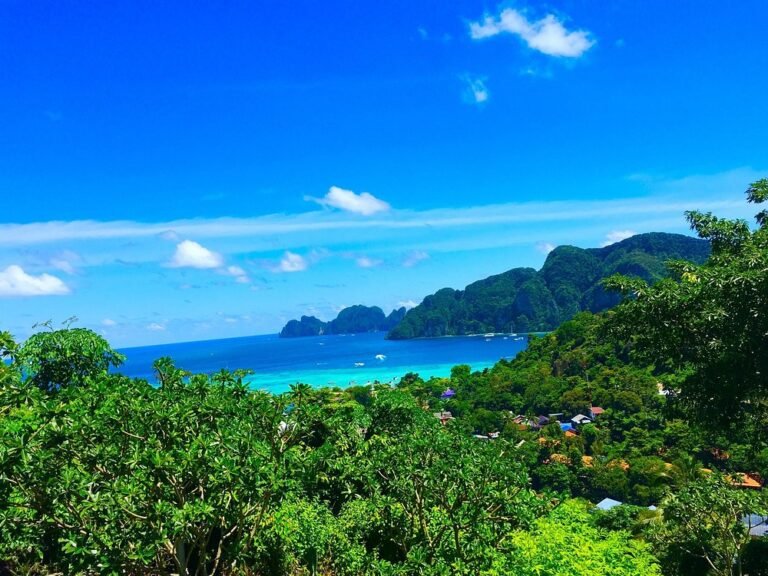
Phuket is often considered one of Thailand’s more expensive destinations. Between beachfront hotels, private taxis, organised excursions and tourist-oriented restaurants, it is easy to spend considerably more than you originally planned.
But enjoying Phuket does not have to mean spending a fortune.
With a little planning and some flexibility, you can experience beautiful beaches, delicious Thai food, local markets, cultural attractions and everything else that makes the island special without constantly worrying about your wallet.
The secret is understanding where your money goes, knowing which expenses are worth paying for and avoiding some of the common tourist traps that can quickly increase your daily spending.
Whether you are visiting Phuket for a week or planning a longer stay, here is how to make your money go further.
1. Choose Your Accommodation Carefully
Accommodation will probably be one of your biggest expenses in Phuket. However, paying more for a hotel does not necessarily mean having a better holiday.
One of the easiest ways to reduce your accommodation costs is to look beyond beachfront resorts and luxury hotels.
Phuket has a wide range of guesthouses, hostels, budget hotels and private rooms. Many offer comfortable accommodation, air conditioning, Wi-Fi and swimming pools at a fraction of the price of larger resorts.
Consider the following when booking:
- Stay slightly away from the beach: Accommodation a short walk or drive from the beachfront is often considerably cheaper.
- Compare different areas: Some parts of Phuket offer much better accommodation value than others.
- Look for longer-stay discounts: If you are staying for several weeks, contact accommodation providers directly to ask about monthly or weekly rates.
- Check what’s included: Free breakfast, Wi-Fi, laundry facilities and access to a swimming pool can make a cheaper room even better value.
- Book with flexibility: Depending on the season, booking in advance or comparing last-minute deals can make a noticeable difference.
An important thing to remember is that the cheapest room is not always the cheapest option overall.
A hotel far away from restaurants, beaches and public transport might save you money on accommodation but cost considerably more in transportation.
Try to choose somewhere that allows you to walk to at least some of the places you plan to visit.
2. Eat Local Instead of Eating Like a Tourist
Food is one of the easiest areas to save money in Phuket without sacrificing the experience.
International restaurants, beachfront dining and Western-style cafés can be relatively expensive, particularly in popular tourist areas.
However, Thai food remains accessible at a much lower price if you know where to look.
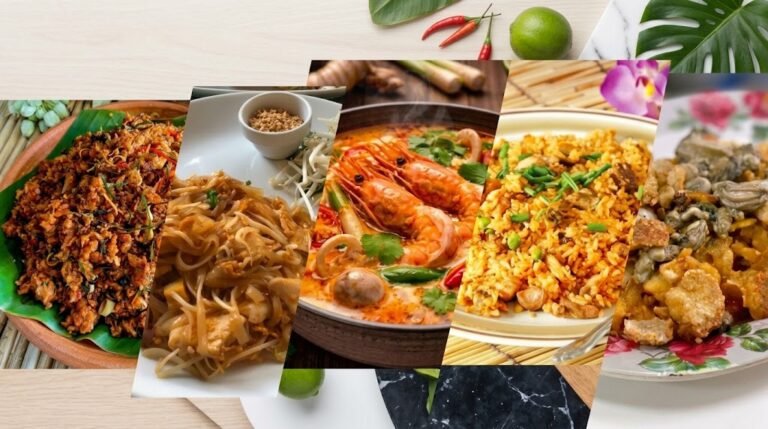
Local restaurants, small family-run eateries, food courts and street food stalls often offer generous portions at affordable prices.
Some good habits include:
- Try local Thai restaurants: Traditional Thai dishes are generally much better value than Western alternatives.
- Visit local food markets: Markets offer everything from grilled meat and noodle dishes to fresh fruit and desserts.
- Look for places popular with Thai customers: A busy local restaurant can often be a better-value option than an establishment catering primarily to tourists.
- Explore food courts: Shopping centre food courts can offer affordable meals in comfortable surroundings.
- Eat seasonal fruit: Fresh tropical fruit is widely available and makes an inexpensive snack.
You do not need to eat Pad Thai every day to save money. Phuket has plenty of affordable Thai dishes worth exploring, including fried rice, noodle soups, stir-fried dishes and various curries.
Another useful tip is to avoid choosing restaurants solely because they have a beautiful view. Beachfront locations often come with higher prices, even when the food itself is fairly ordinary.
That does not mean you should never enjoy a nice dinner by the sea. Just make it an occasional experience rather than your everyday dining routine.
3. Understand Transportation Before You Arrive
Transportation is one of the biggest potential budget killers in Phuket.
Unlike some other Thai destinations, Phuket does not have an extensive public transportation network that conveniently connects every beach and tourist attraction.
This means that getting around can become surprisingly expensive if you rely on taxis and private transfers for every journey.
Here are some ways to keep transportation costs under control.
Use Public Transportation Where Possible
Phuket has several public transportation options, including local buses and services connecting popular tourist areas.
They are generally much cheaper than private taxis, although routes, schedules and operating hours can be limited.
The important thing is to plan your journeys in advance rather than assuming you can easily find affordable transportation everywhere.
Compare Ride-Hailing Services
Ride-hailing applications can be useful when travelling between areas.
Always compare the available options before booking, as prices can vary depending on demand, distance and time of day.
Having an application ready before you arrive also makes it easier to understand the expected price before committing to a journey.
Avoid Taking Taxis for Every Short Journey
A short journey can sometimes cost disproportionately more than expected, particularly in tourist-heavy areas.
If your destination is within walking distance, consider walking instead.
Apart from saving money, this can be a good way to discover smaller restaurants, shops and local neighbourhoods that you might otherwise miss.
Be Careful With Motorbike Rentals
Renting a motorbike is sometimes presented as the ultimate budget transportation solution in Phuket.
While it can be convenient for experienced riders, it is not automatically a cheap or sensible option for everyone.
You need to consider rental costs, fuel, insurance coverage, legal requirements and the risks associated with riding in unfamiliar traffic.
Make sure you have the appropriate motorcycle licence and an International Driving Permit where required. A standard car driving licence is not sufficient.
Never ride without a proper helmet, and do not assume that your travel insurance covers riding a motorbike.
An accident can quickly turn an inexpensive holiday into a very expensive one.
4. Take Advantage of Phuket's Free Attractions
One of the best things about Phuket is that many of its most memorable experiences cost absolutely nothing.
You do not need to book an expensive excursion every day to enjoy the island.
Some of the best activities are completely free or require very little spending.
Consider including these in your itinerary:
- Spend time at the beaches: Phuket has numerous public beaches where you can swim, relax and enjoy the scenery without paying an entrance fee.
- Explore local neighbourhoods: Walking around traditional streets and local communities can be an experience in itself.
- Visit temples: Many temples welcome visitors without an entrance fee, although donations are appreciated.
- Watch the sunset: Find a suitable viewpoint or beach and enjoy one of Phuket’s famous sunsets.
- Explore local markets: Even if you do not buy anything, markets are an interesting way to experience local food, culture and everyday life.
- Enjoy the outdoors: Walking, sightseeing and exploring the island’s natural scenery can fill an entire day without a large budget.
A good approach is to mix free activities with a few paid experiences that genuinely interest you.
You will often remember a beautiful sunset or an afternoon exploring somewhere new just as much as an expensive organised tour.
5. Be Selective With Tours and Excursions
Phuket is an excellent starting point for exploring nearby islands, beaches and other attractions.
However, organised excursions can become one of your biggest expenses, especially if you book several trips during a short holiday.
Boat tours, island-hopping excursions, private transfers and adventure activities can all add up quickly.
Instead of booking something every day, decide which experiences are most important to you.
A few ways to save money:
- Compare multiple tour operators: Similar excursions can have noticeably different prices.
- Check what is included: Transport, meals, entrance fees and equipment may or may not be included in the advertised price.
- Avoid booking solely based on discounts: A cheap excursion is not necessarily good value if the itinerary is rushed or important extras cost more.
- Consider group tours: Sharing transportation and boat costs is generally cheaper than booking a private experience.
- Book selectively: Choose a few memorable excursions rather than filling every day with paid activities.
It is also worth considering whether you actually need an organised tour.
Some attractions can be visited independently, potentially saving you money on transportation and tour fees.
However, certain island trips and boat excursions are more practical when booked through an established operator.
6. Shop at Local Markets and Convenience Stores
Small everyday purchases can quietly consume a surprising amount of your travel budget.
Buying bottled drinks, snacks and other essentials exclusively from tourist-oriented shops or hotel facilities can become expensive over time.
Instead, make use of local convenience stores, supermarkets and fresh markets.
They are useful for purchasing:
- Bottled water and other drinks.
- Snacks and breakfast items.
- Fresh fruit.
- Basic toiletries.
- Sunscreen and other everyday essentials.
If your accommodation has a refrigerator, you can also keep some basic groceries available for breakfast or an occasional inexpensive meal.
However, be sensible about what you buy. There is little point purchasing large quantities of groceries if you are only staying for a few days.
One particularly useful habit is carrying a reusable water bottle and refilling it where safe drinking water is provided. Do not assume that tap water in Phuket is suitable for drinking.
7. Avoid Unnecessary Banking and Currency Exchange Fees
Another area where travellers sometimes lose money is exchanging currency and withdrawing cash.
A few small fees might not seem important individually, but they can add up over a longer holiday.
Before travelling, check:
- What foreign transaction fees your bank charges.
- Whether your card has additional international withdrawal fees.
- What ATM fees apply in Thailand.
- Whether your bank offers a competitive exchange rate.
- Whether your card allows you to withdraw Thai baht without additional charges.
When withdrawing cash or paying by card, always pay in Thai baht rather than accepting a conversion into your home currency when the payment terminal or ATM offers it. The conversion offered by the merchant or ATM can be less favourable than your card provider’s exchange rate.
It is also worth comparing several currency exchange booths rather than automatically exchanging money at your hotel or the first counter you find.
Always check the final amount before completing an exchange.
8. Travel During the Right Season
When you visit Phuket can make a considerable difference to how much your holiday costs.
Accommodation and flight prices fluctuate throughout the year, with particularly high demand during the main tourist season.
The period around Christmas and New Year is especially popular, and prices can increase significantly.
If your travel dates are flexible, consider visiting outside the busiest periods.
The rainy season can offer better accommodation deals and fewer crowds. However, it is important to understand the trade-offs.
Rain does not necessarily mean that it will rain all day, every day. You can still experience plenty of sunshine, although weather conditions are less predictable.
There may also be rougher seas, stronger waves and restrictions on certain boat excursions.
Consider the following when choosing your dates:
- High season: Generally offers more predictable beach weather but often comes with higher accommodation prices and greater demand.
- Shoulder season: Can provide a balance between reasonable weather, fewer crowds and more competitive prices.
- Rainy season: Often offers better accommodation deals, but requires more flexibility when planning outdoor activities.
If you are primarily interested in beaches, swimming and island excursions, weather conditions should be part of your decision.
Saving money on accommodation is not necessarily worthwhile if the weather prevents you from enjoying the activities you travelled for.
9. Be Careful With Tourist Traps and Unexpected Expenses
Travelling on a budget is not just about finding cheap accommodation and food. It is also about avoiding unnecessary expenses.
Phuket is a major international tourist destination, and some services are priced accordingly.
A few things to keep in mind:
- Always agree on transportation prices beforehand when using services without a fixed fare.
- Check restaurant menus and prices before sitting down, especially in tourist areas.
- Be cautious with unusually cheap offers for tours, rentals and activities.
- Check rental vehicles carefully and document any existing damage before taking them.
- Understand entrance fees before visiting attractions.
- Avoid impulse purchases at tourist-oriented shops where prices can be significantly higher.
You should also leave some room in your budget for unexpected expenses.
A damaged phone, an unplanned taxi journey, medical expenses or a change of accommodation can quickly affect your finances.
Having a small emergency reserve is much better than spending your entire holiday budget down to the last baht.
10. Plan Your Days Around Location
One of the most underrated ways to save money in Phuket is simply planning your activities more efficiently.
The island is larger than many first-time visitors expect, and travelling between different areas can take considerably longer than anticipated.
Instead of visiting attractions scattered across the island every day, try grouping activities by geographical area.
For example, you could dedicate one day to exploring a particular beach area, another to sightseeing and local markets, and another to an island excursion.
This approach has several advantages:
- Fewer transportation expenses.
- Less time spent travelling.
- More time enjoying each destination.
- Less temptation to take expensive last-minute taxis.
It also makes your holiday feel less rushed.
Rather than trying to see everything in a few days, focus on getting the most out of the places you actually visit.
11. Set a Realistic Daily Budget
Perhaps the most important part of travelling on a tight budget is knowing how much you can afford to spend each day.
There is no universal daily budget for Phuket. Your expenses will depend on your accommodation, travel style, activities, transportation choices and whether you are travelling alone or sharing costs with someone.
Instead of relying on a single daily spending figure, break your budget into categories.
Consider setting aside money for:
- Accommodation.
- Food and drinks.
- Transportation.
- Activities and excursions.
- Shopping and entertainment.
- Unexpected expenses.
It is also important to distinguish between fixed and flexible expenses.
Your accommodation might already be paid for, meaning you only need to budget for daily spending. Alternatively, if you are paying for everything as you go, accommodation needs to be included in your daily calculations.
A useful trick is to decide on a weekly spending limit rather than worrying about every individual purchase.
This gives you some flexibility. You might spend a little more on a special dinner one evening and compensate by choosing cheaper activities or meals the following day.
The goal is not to avoid spending money altogether. It is to spend it on things that actually improve your holiday.
12. Don't Sacrifice Your Holiday Just to Save Money
Finally, remember why you came to Phuket in the first place.
It is easy to become so focused on saving money that you end up missing out on experiences you would genuinely enjoy.
There is nothing wrong with occasionally paying more for a good meal, a comfortable hotel room or an excursion you have been looking forward to.
The important thing is to make those decisions consciously.
Spending a little more on accommodation in a convenient location might save you money on transportation. Paying for a quality boat tour might be much better value than booking several cheaper excursions.
Likewise, choosing a comfortable restaurant for a special evening does not mean you have to eat there every day.
A good budget is not about choosing the cheapest possible option every time. It is about understanding what matters to you and allocating your money accordingly.
Final Thoughts: Is Phuket Good for Budget Travellers?
Absolutely. Phuket might be more expensive than some other parts of Thailand, but that does not mean it is out of reach for travellers on a limited budget.
The biggest difference comes down to your everyday decisions.
Choose accommodation with a convenient location, eat local food, use affordable transportation where possible and take advantage of the many free experiences the island offers.
Most importantly, plan ahead and avoid spending money simply because something is marketed towards tourists.
With a little flexibility, you can enjoy everything from beautiful beaches and traditional Thai food to unforgettable sunsets and island adventures without needing a luxury holiday budget.
You don’t need to spend a fortune to experience Phuket. You just need to know where your money is best spent.