


Thailand has become an increasingly interesting destination for cryptocurrency users, from Bitcoin investors and digital nomads to long-term expats and international tourists. But can you actually use Bitcoin to pay for things in Thailand? And what happens if you want to spend your crypto while visiting Phuket?
The answer is more interesting than you might expect. Thailand has introduced new initiatives that allow eligible foreign tourists to convert cryptocurrency into Thai Baht for everyday spending, while maintaining strict regulations around direct crypto payments.
Whether you hold Bitcoin (BTC), Ethereum (ETH), USDT or other digital assets, this guide explains how cryptocurrency works in Thailand in 2026, what payment options are available, and what you should know before travelling to Phuket. If it’s your first visit, check out our Ultimate Guide to Phuket for practical travel advice, transportation tips and everything you need to plan your stay.
Is Cryptocurrency Legal in Thailand?
Yes. Owning, buying, selling and trading cryptocurrency is legal in Thailand, provided you follow the country’s financial regulations.
Thailand regulates cryptocurrency through its Securities and Exchange Commission (SEC), which oversees digital asset businesses such as exchanges, brokers and dealers.
The important distinction is between owning cryptocurrency as an investment and using it as a payment method.
- Buying cryptocurrency: Legal through regulated platforms.
- Holding Bitcoin and other cryptocurrencies: Legal.
- Trading crypto: Legal through licensed digital asset businesses.
- Paying directly with Bitcoin: Restricted under Thailand’s payment regulations.
- Converting crypto into Thai Baht: Possible through regulated services, including the TouristDigiPay initiative for eligible foreign visitors.
Thailand does not recognise Bitcoin or other cryptocurrencies as legal tender. Businesses are generally expected to receive payments in Thai Baht rather than cryptocurrency.
The SEC introduced restrictions in 2022 prohibiting regulated digital asset businesses from facilitating or promoting cryptocurrency as a payment method for goods and services.
Can You Use Bitcoin in Phuket?
If you’re visiting Phuket and hoping to pay for your hotel, restaurant meals or activities directly with Bitcoin, you may be disappointed.
Cryptocurrency is not a standard payment method across the island. Most businesses accept traditional payment methods such as:
- Cash (Thai Baht)
- Credit and debit cards
- Bank transfers
- QR code payments through supported banking applications
You might encounter businesses or individuals interested in cryptocurrency, particularly within international expat and digital nomad communities. However, you should never assume a hotel, restaurant or tour operator accepts Bitcoin.
For everyday transportation, services such as Grab and Bolt are popular alternatives to traditional taxis. Read our guide to getting around Phuket with Grab, Bolt and taxis to learn how local transportation and payments work.
Can You Pay with Crypto in Thailand?
Although direct cryptocurrency payments are restricted, Thailand has introduced an alternative.
The TouristDigiPay programme allows eligible foreign tourists to convert digital assets into Thai Baht and spend the resulting balance through an electronic payment system.
This means you can potentially use your cryptocurrency to fund everyday purchases without asking individual businesses to accept Bitcoin.
We’ll explain how this works below.
TouristDigiPay: Thailand's Crypto Payment Initiative
One of the most interesting developments for cryptocurrency users visiting Thailand is TouristDigiPay.
Launched as an 18-month regulatory sandbox in August 2025, the programme was developed through cooperation between Thailand’s Securities and Exchange Commission, Ministry of Finance, Anti-Money Laundering Office and Ministry of Tourism and Sports.
Its purpose is to make it easier for foreign tourists to use their digital assets while ensuring that businesses receive payments in Thai Baht.
Who Can Use TouristDigiPay?
The programme is intended for foreign tourists temporarily staying in Thailand.
You must complete identity verification and meet the requirements of the participating service providers. Having a passport alone does not guarantee eligibility.
It is also important to understand that TouristDigiPay is a regulated pilot programme, not a universal crypto payment system.
Is TouristDigiPay Available in Phuket?
The programme is designed for spending at participating merchants across Thailand, rather than being limited to Bangkok.
However, don’t assume every business in Phuket accepts payments through the system. Check the participating providers, supported payment methods and current availability before relying on it during your holiday.
The original pilot was designed to run for 18 months, making November 2026 part of its planned testing period.
Official information: Thailand SEC – TouristDigiPay.
Cryptocurrency Exchanges in Thailand
If you’re staying in Thailand for an extended period or want to trade cryptocurrency locally, there are several regulated exchanges.
Some platforms listed by Thailand’s SEC include:
Bitkub
Bitkub is one of Thailand’s best-known cryptocurrency exchanges. It allows users to buy and sell supported digital assets and trade against Thai Baht.
Website: Bitkub
Orbix
Orbix Trade is another Thai-licensed digital asset exchange. It offers cryptocurrency trading services for customers who meet its account requirements.
Website: Orbix Trade
Binance TH
Binance TH is a locally regulated exchange operated by Gulf Binance. It provides access to cryptocurrency trading within Thailand’s regulatory framework.
Website: Binance TH
Other Licensed Exchanges
Thailand’s SEC also lists other regulated exchanges, including:
- Upbit Thailand
- Z.com EX
- Waan Exchange
Important: Not every exchange accepts foreign tourists or allows account registration using an overseas address. Check the platform’s current eligibility requirements before travelling.
You can find the latest list of licensed digital asset businesses through the official SEC website:
Can You Use a Crypto Debit Card in Thailand?
Another option for cryptocurrency holders is a crypto-linked debit or payment card.
Depending on the provider, these cards allow you to spend funds held in cryptocurrency or a linked fiat balance. The provider converts the relevant amount into a supported traditional currency when you make a payment.
For example, you might use a crypto-linked Visa or Mastercard to pay at a hotel, restaurant or shopping centre in Phuket.
However, there are a few things to consider:
- Not every crypto card is available to residents of every country.
- Some providers require you to convert your cryptocurrency into fiat before spending.
- Foreign exchange and conversion fees may apply.
- Some merchants or ATMs may reject certain prepaid or international cards.
A crypto card can be convenient, but it is worth having a traditional bank card and some Thai Baht as backup.
Having reliable mobile internet also makes managing your payments, banking apps and travel bookings much easier. Check out our guide to the best SIM cards and eSIM plans in Phuket to find the right option for your trip.
Cryptocurrency Taxes in Thailand (2026)
Thailand’s cryptocurrency tax regulations have undergone significant changes.
In September 2025, Thailand published a ministerial regulation introducing a five-year personal income tax exemption on qualifying cryptocurrency and digital token capital gains.
The exemption applies to qualifying gains realised between 1 January 2025 and 31 December 2029, provided the transactions are conducted through legally licensed digital asset exchanges, brokers or dealers in Thailand.
This is an important distinction: the exemption does not automatically apply to every cryptocurrency transaction or every person holding crypto in Thailand.
What About Tourists and Expats?
If you’re visiting Phuket for a holiday, you generally don’t need to worry about Thai cryptocurrency investment taxes simply because you hold Bitcoin in an overseas wallet.
However, your individual tax position can depend on factors such as:
- Your tax residency.
- Where your income is generated.
- Whether you trade or dispose of cryptocurrency while in Thailand.
- Whether your transactions qualify for the relevant exemptions.
Long-term residents and people earning income through cryptocurrency should seek professional tax advice.
The Thai tax exemption should not be confused with an exemption from tax obligations in your home country.
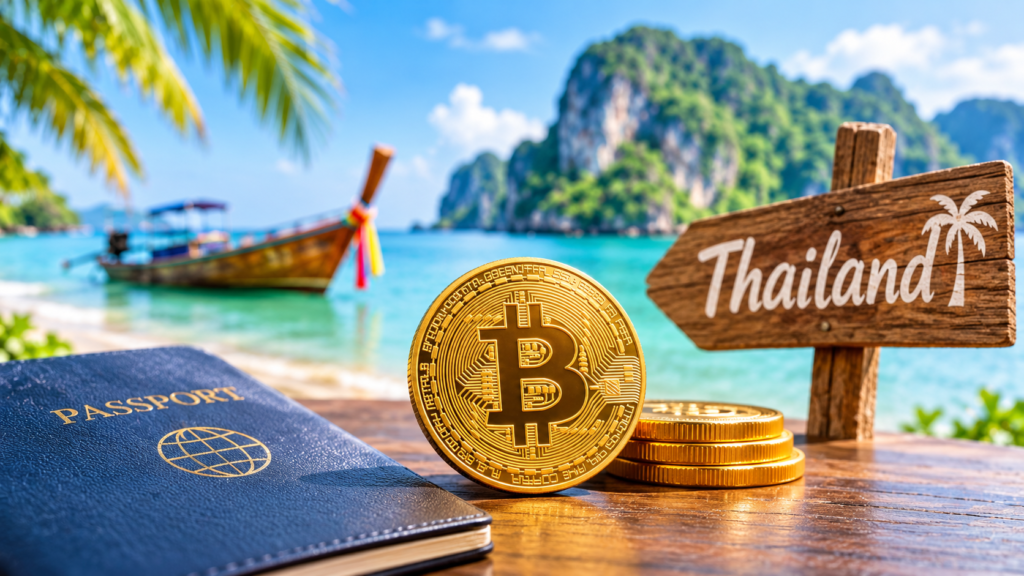
Is Phuket Crypto-Friendly?
Phuket attracts an international community of entrepreneurs, remote workers, digital nomads and cryptocurrency enthusiasts.
The island’s international atmosphere makes it an interesting destination for people working in technology and digital finance.
However, being crypto-friendly culturally is not the same as having widespread cryptocurrency payment acceptance.
For everyday spending, visitors should still expect to use Thai Baht, bank cards and conventional electronic payment methods.
If you’re planning an extended stay in Phuket, it makes sense to have access to both traditional banking and cryptocurrency services. The island is also popular among remote workers and digital nomads, thanks to its international community and lifestyle. If you’re considering a longer visit, explore our complete Phuket travel guide to learn more about living, travelling and exploring the island.
Practical Tips for Travelling to Phuket with Cryptocurrency
If you hold Bitcoin, Ethereum or stablecoins and plan to visit Phuket, a little preparation can make your trip easier.
Here are some practical recommendations:
1. Don’t rely exclusively on cryptocurrency
Even with new initiatives such as TouristDigiPay, traditional payment methods remain essential. Carry a bank card and some cash. It’s also worth understanding how currency exchange works before arriving. Having some Thai Baht available is useful for smaller businesses, local markets and places that don’t accept cards.
2. Check exchange availability before travelling
Don’t assume you can open an account with a Thai cryptocurrency exchange using a foreign passport. Verify its KYC and residency requirements first.
3. Consider a crypto payment card
If you already have access to a crypto-linked payment card, check its international usage fees and supported currencies before departure.
4. Be careful when exchanging cryptocurrency privately
Avoid unlicensed exchange services and individuals offering informal cash conversions. These arrangements can expose you to scams, theft and legal complications.
5. Keep records of your transactions
Save transaction histories, exchange records and relevant documentation, particularly if you’re staying in Thailand long-term.
Final Thoughts: Is Thailand a Good Destination for Crypto Users?
Thailand is becoming an increasingly interesting destination for cryptocurrency enthusiasts, but it is important to understand how the local regulations work.
You can legally own and trade cryptocurrency, and initiatives such as TouristDigiPay are making it easier for eligible foreign visitors to convert digital assets into Thai Baht.
For visitors to Phuket, however, traditional payment methods remain the most practical way to pay for everyday expenses. Bitcoin is not yet a universally accepted payment method across the island.
If you’re a digital nomad, long-term visitor or cryptocurrency enthusiast, Thailand offers an interesting combination of an international community, developing digital financial infrastructure and an evolving regulatory environment.
Just make sure you understand the rules before relying on crypto as your primary way to spend money during your stay.


